





From the Retrodelphia archive
Milo Baughman · Drexel
Perspective for Milo Baughman Walnut Desk Vanity via
c. 1950s
- Size
- 29.5"H x 48.5"W x 19"D
- Material
- Mirror, Walnut, Wood
This piece has found a home.
Looking for something similar?
Our inventory changes constantly. Tell us what caught your eye and we’ll keep it in mind while sourcing, or browse pieces currently available.
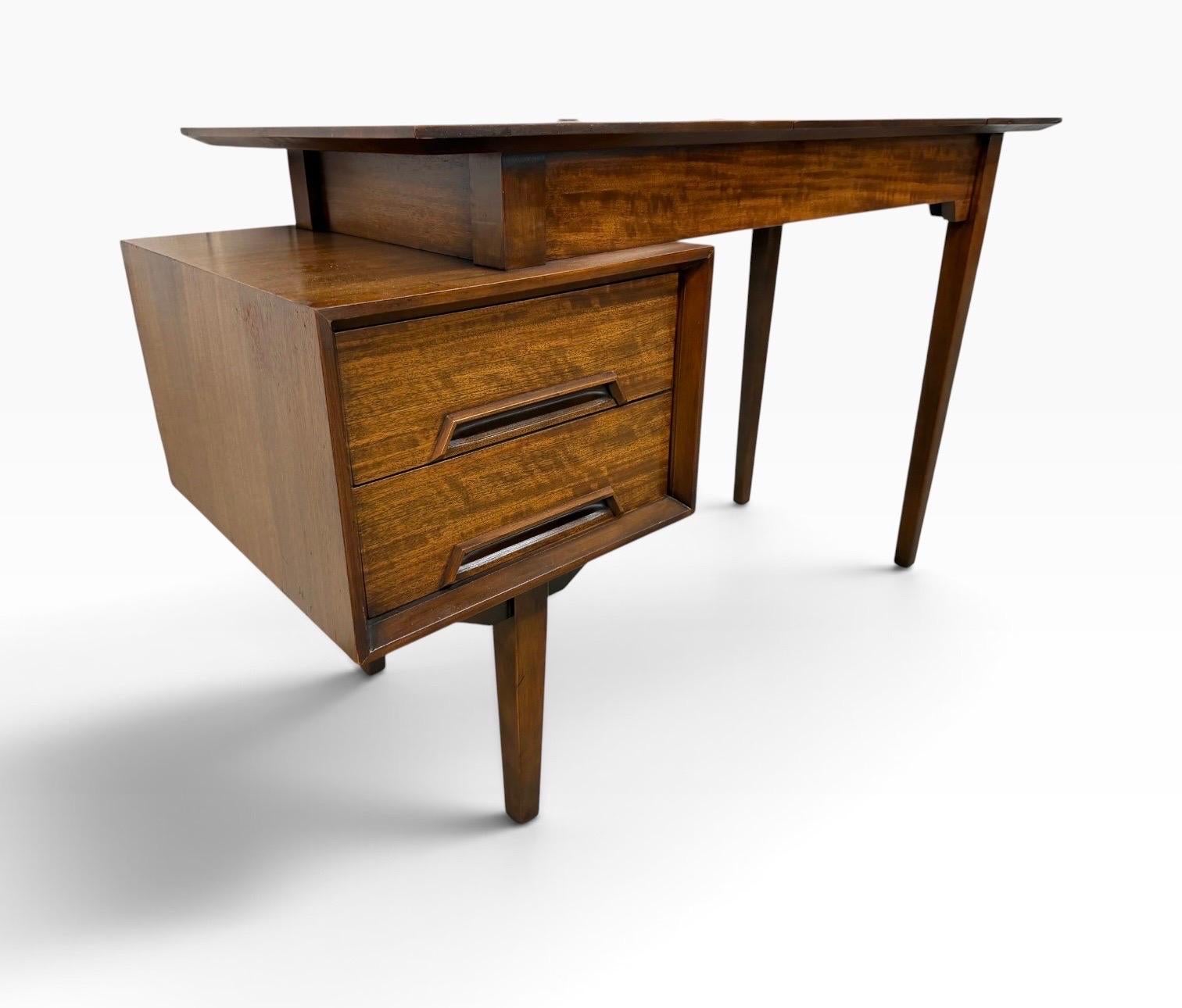
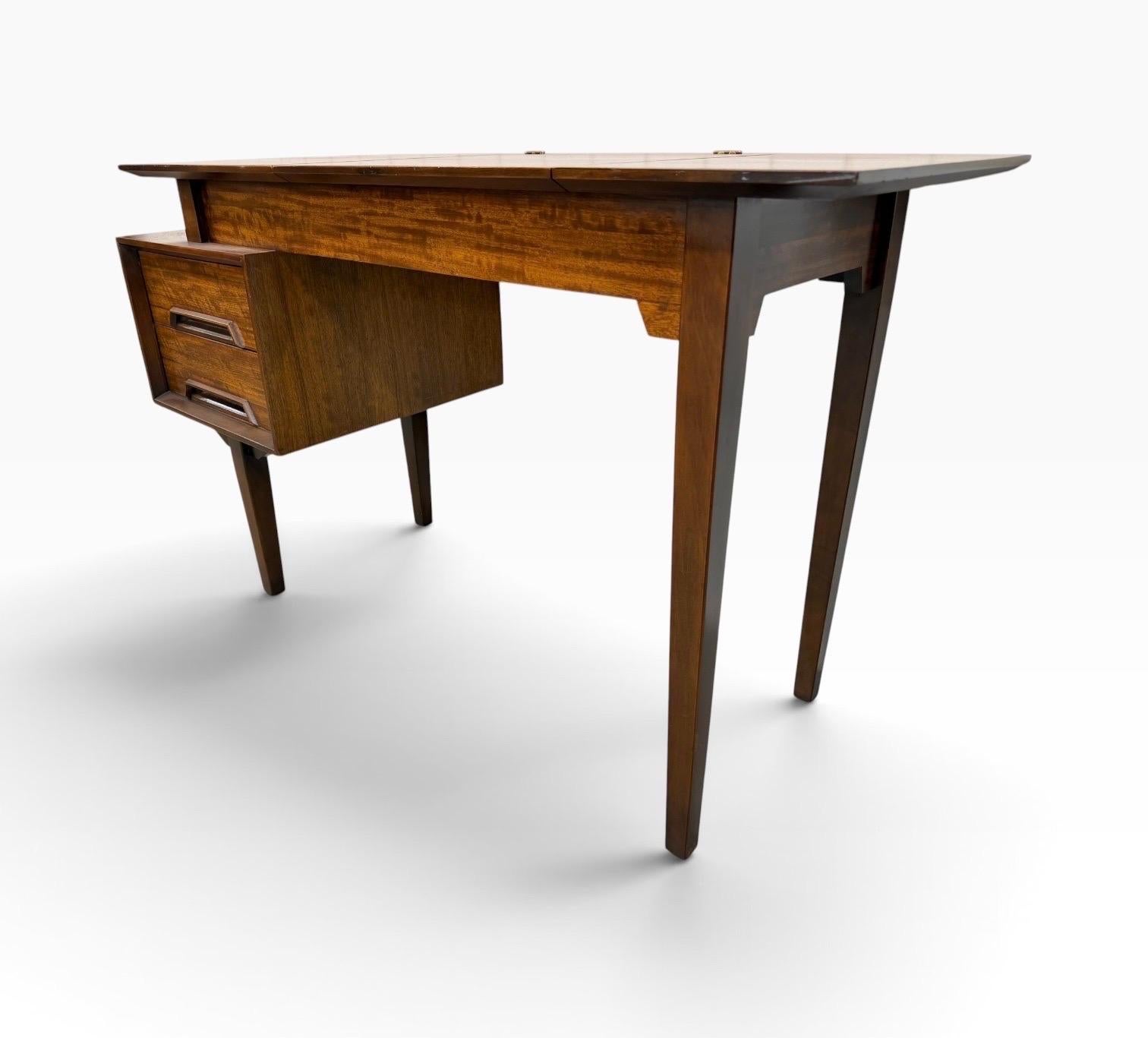
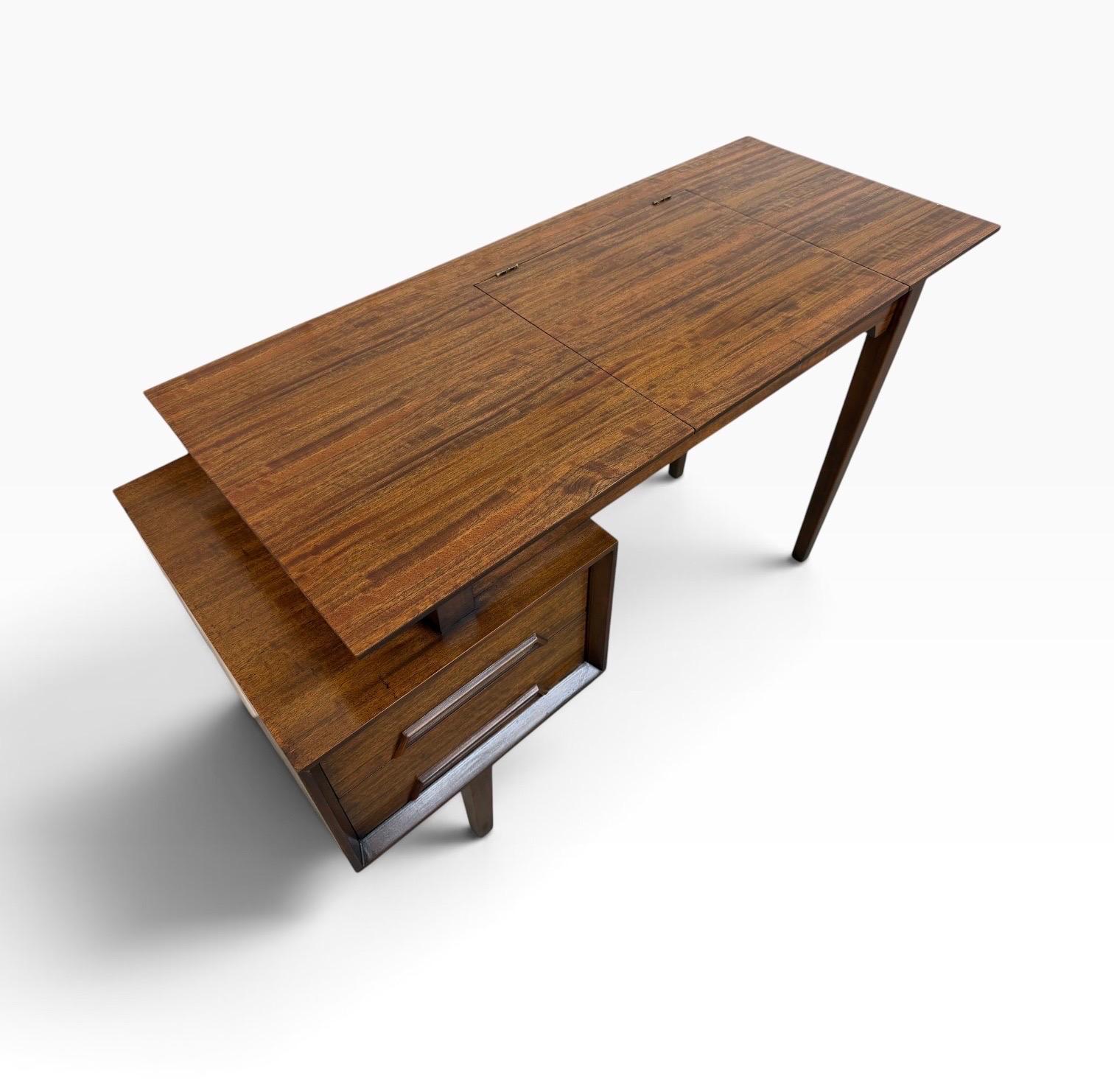
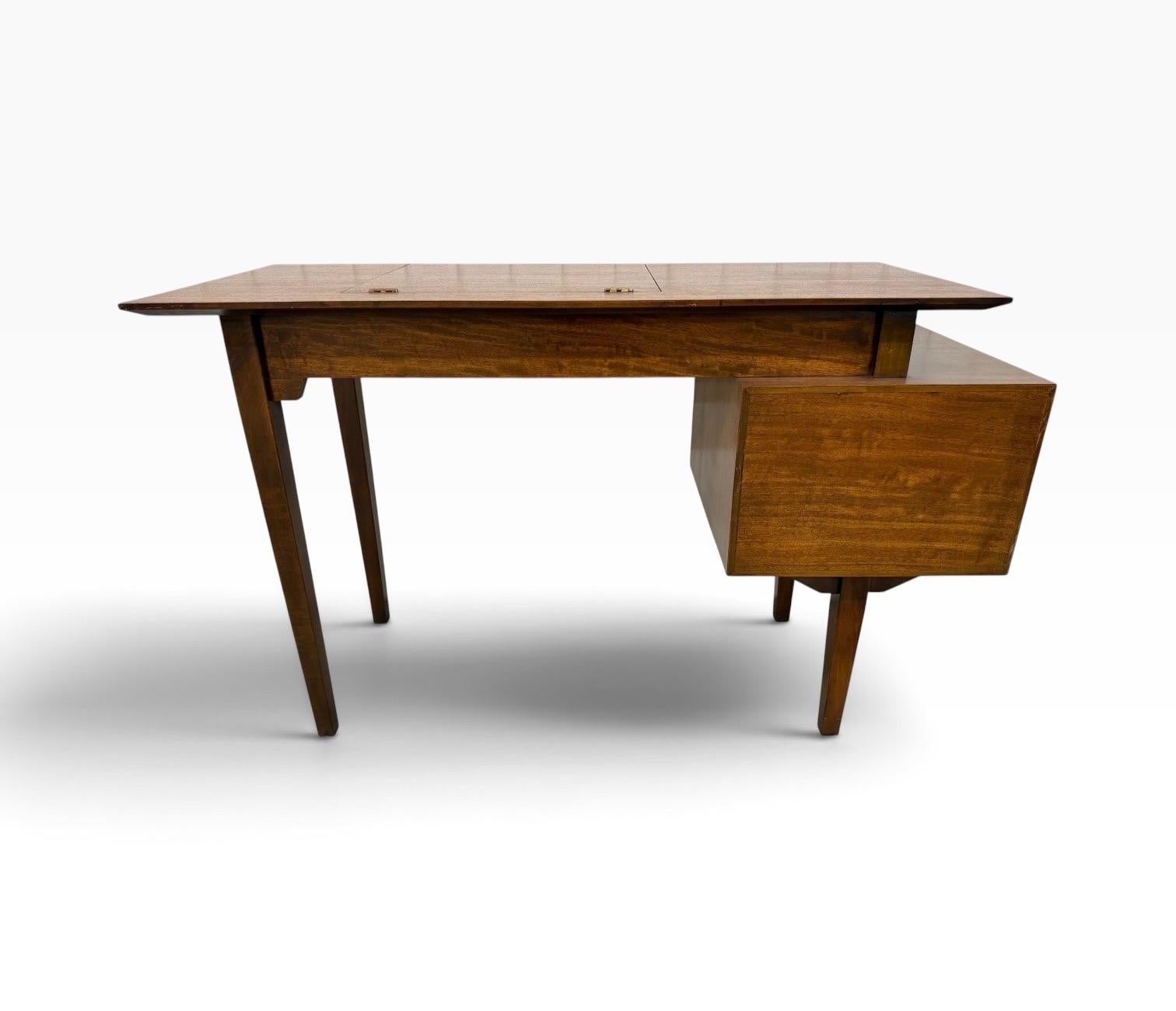
A striking example of 1950s American modern design, this Drexel Perspective walnut vanity / desk, designed by Milo Baughman, combines sculptural form with clever functionality. Crafted in rich walnut, the piece features beautifully tapered legs, two spacious drawers with distinctive integrated pulls, and an elevated work surface that gives the design a light, architectural appearance.Read moreRead less
A striking example of 1950s American modern design, this Drexel Perspective walnut vanity / desk, designed by Milo Baughman, combines sculptural form with clever functionality. Crafted in rich walnut, the piece features beautifully tapered legs, two spacious drawers with distinctive integrated pulls, and an elevated work surface that gives the design a light, architectural appearance. The center section opens to reveal a hidden vanity compartment with storage and a built-in mirror, allowing the piece to function equally well as a dressing table or writing desk. The warm walnut grain and clean-lined profile are classic hallmarks of the Perspective collection. A versatile and highly collectible piece perfect for a bedroom, dressing area, office, or sophisticated mid-century interior.
Specifications
How we attribute makers and designers
We research and identify designers and makers whenever surviving labels, construction details, or reliable documentation allow. On older furniture, labels and stamps may be missing, faded, or removed, and many manufacturers produced closely related designs; some pieces may be later reproductions. When the evidence is not strong enough for a confident attribution, we list the maker as unknown rather than speculate.

