From the Retrodelphia archive
American of Martinsville
Accord Walnut Nightstands – Set of 2
c. 1960s
- Size
- 24"H x 20"W x 16"D
- Material
- Chrome, Walnut, Wood
This piece has found a home.
Looking for something similar?
Our inventory changes constantly. Tell us what caught your eye and we’ll keep it in mind while sourcing, or browse pieces currently available.
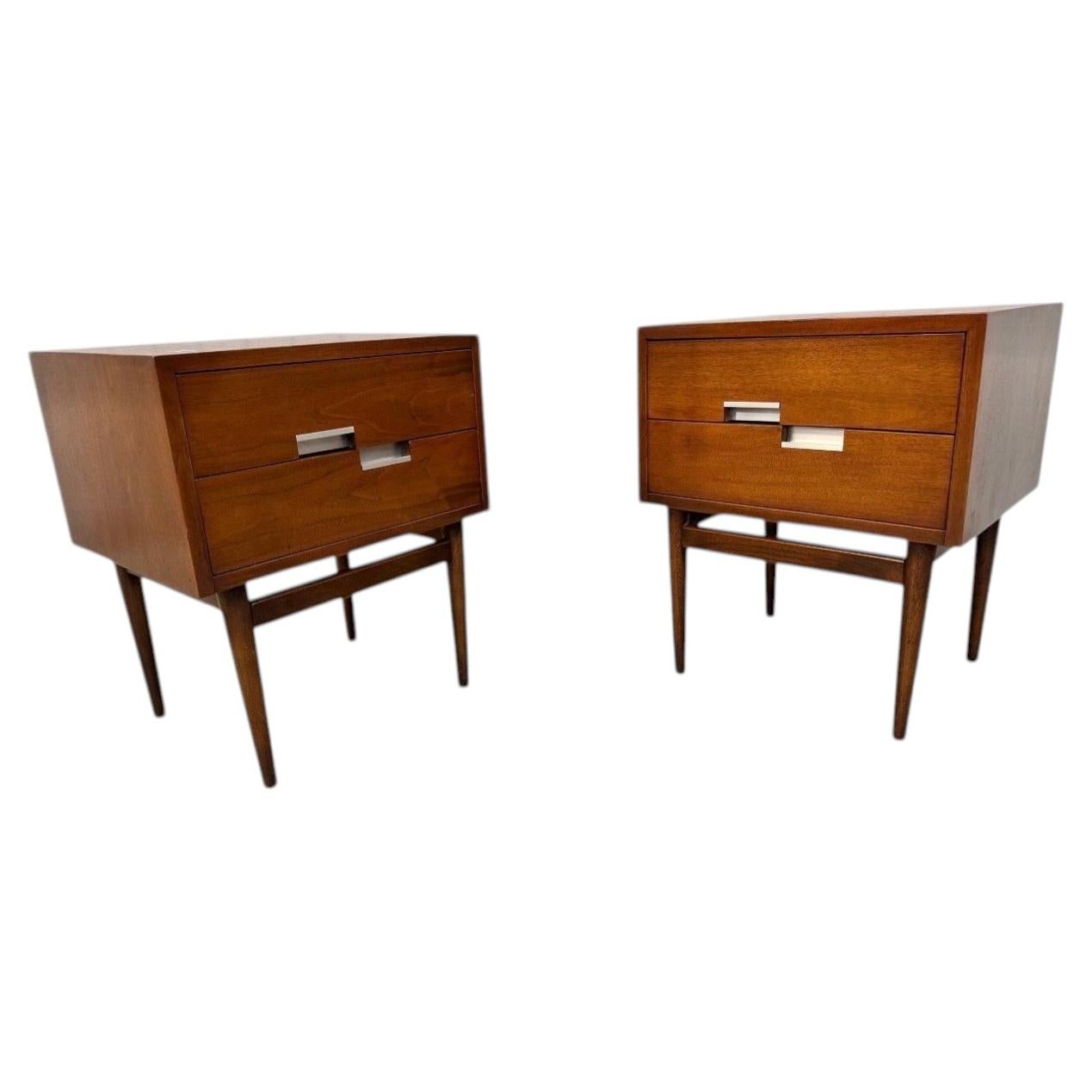
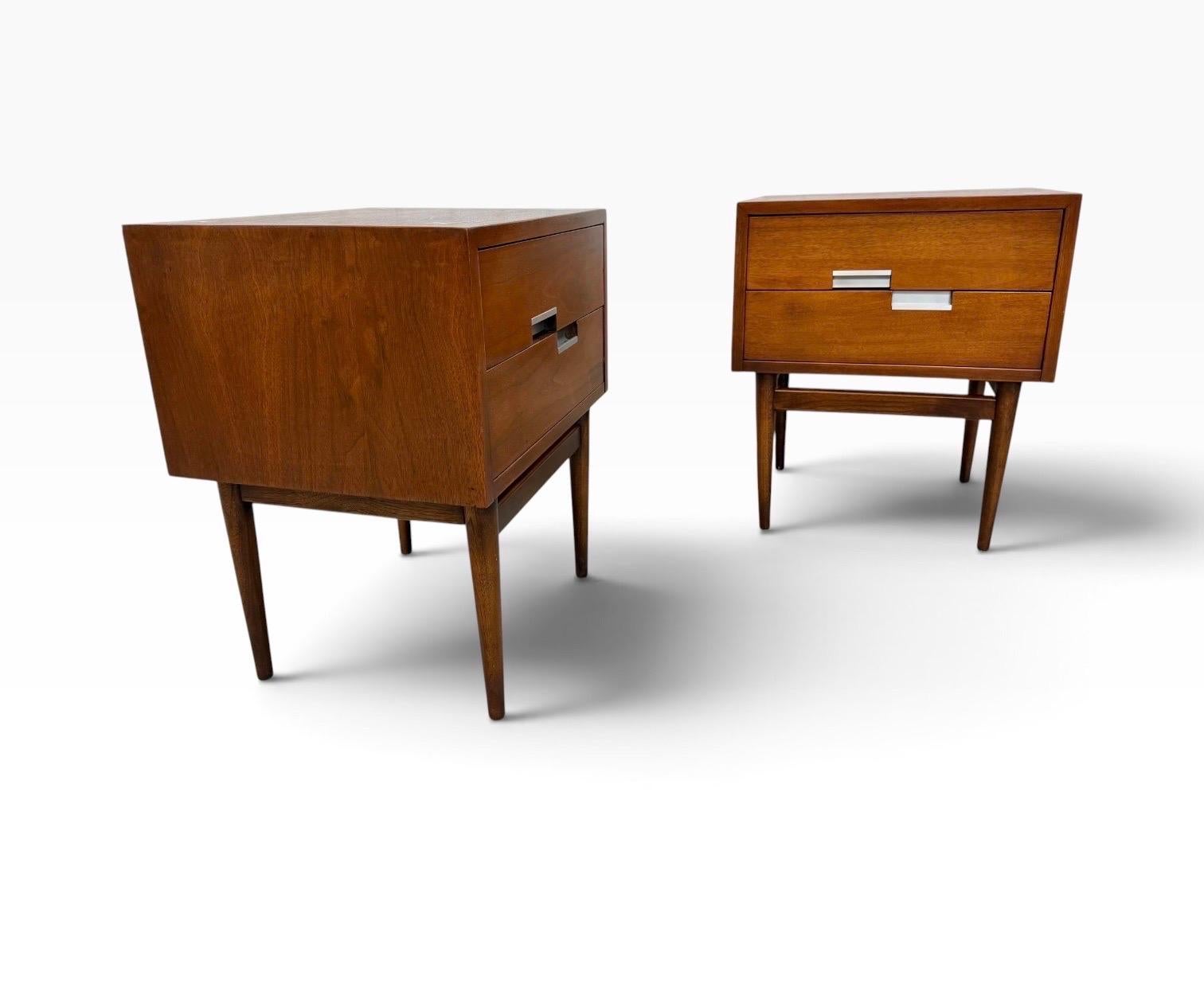
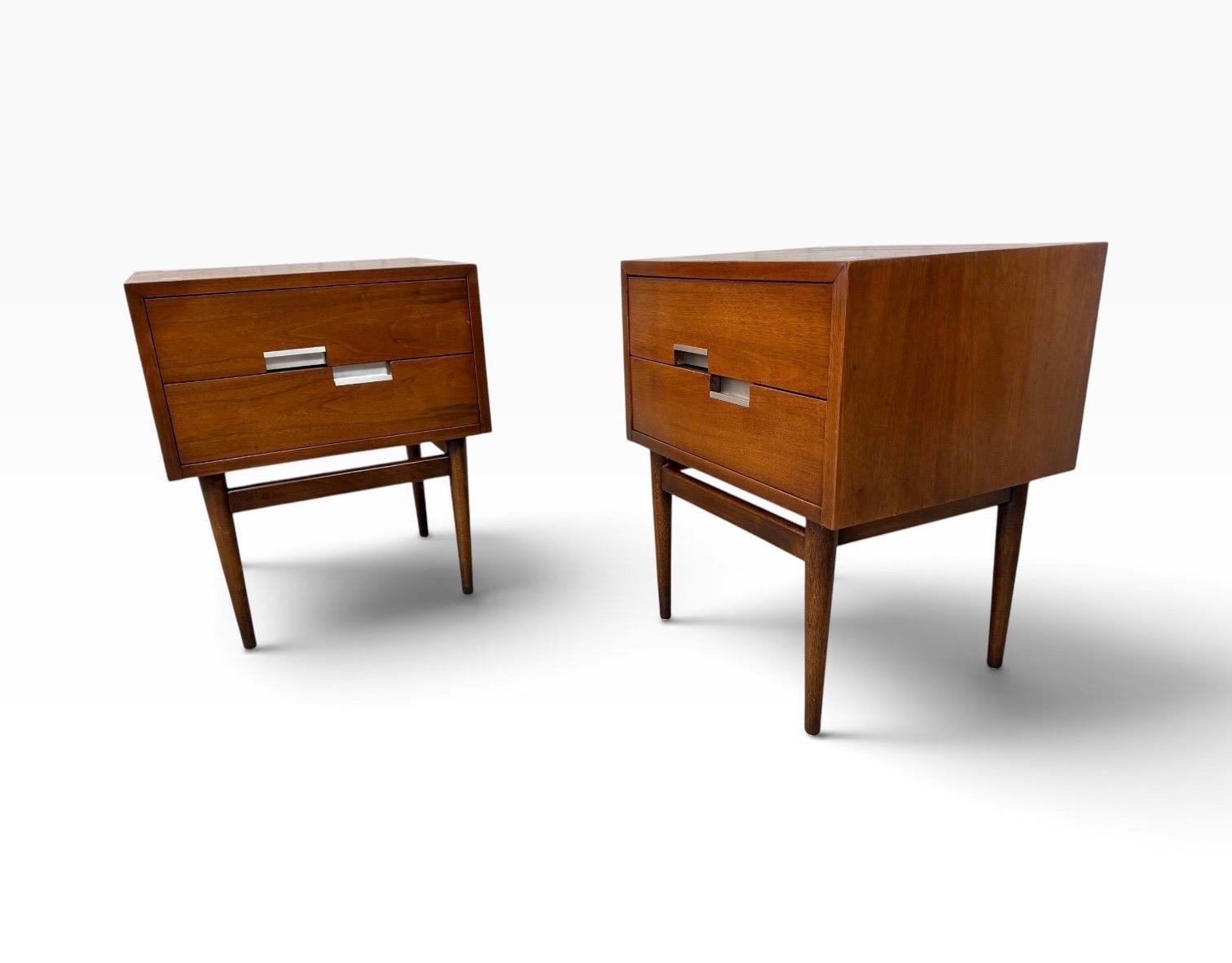
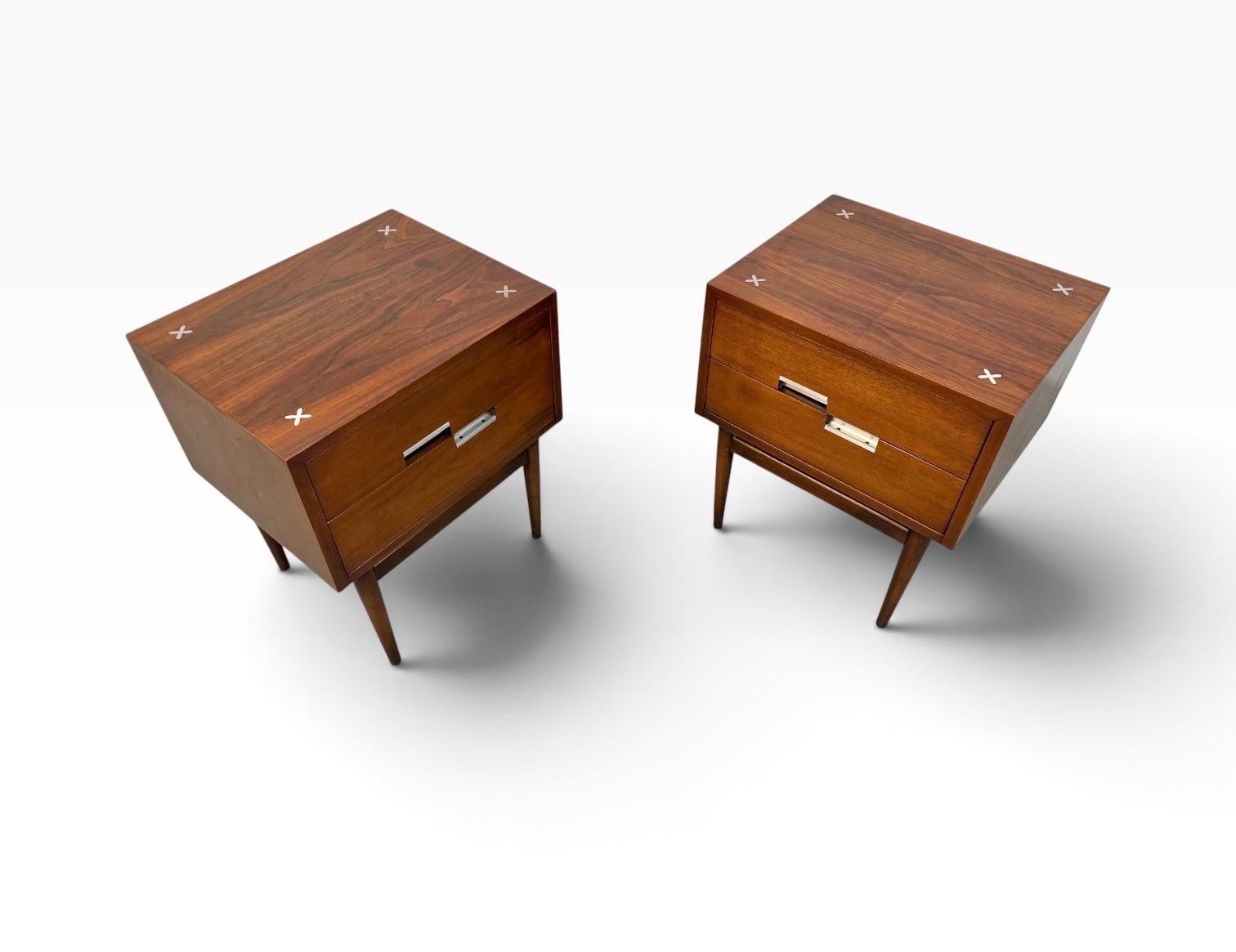
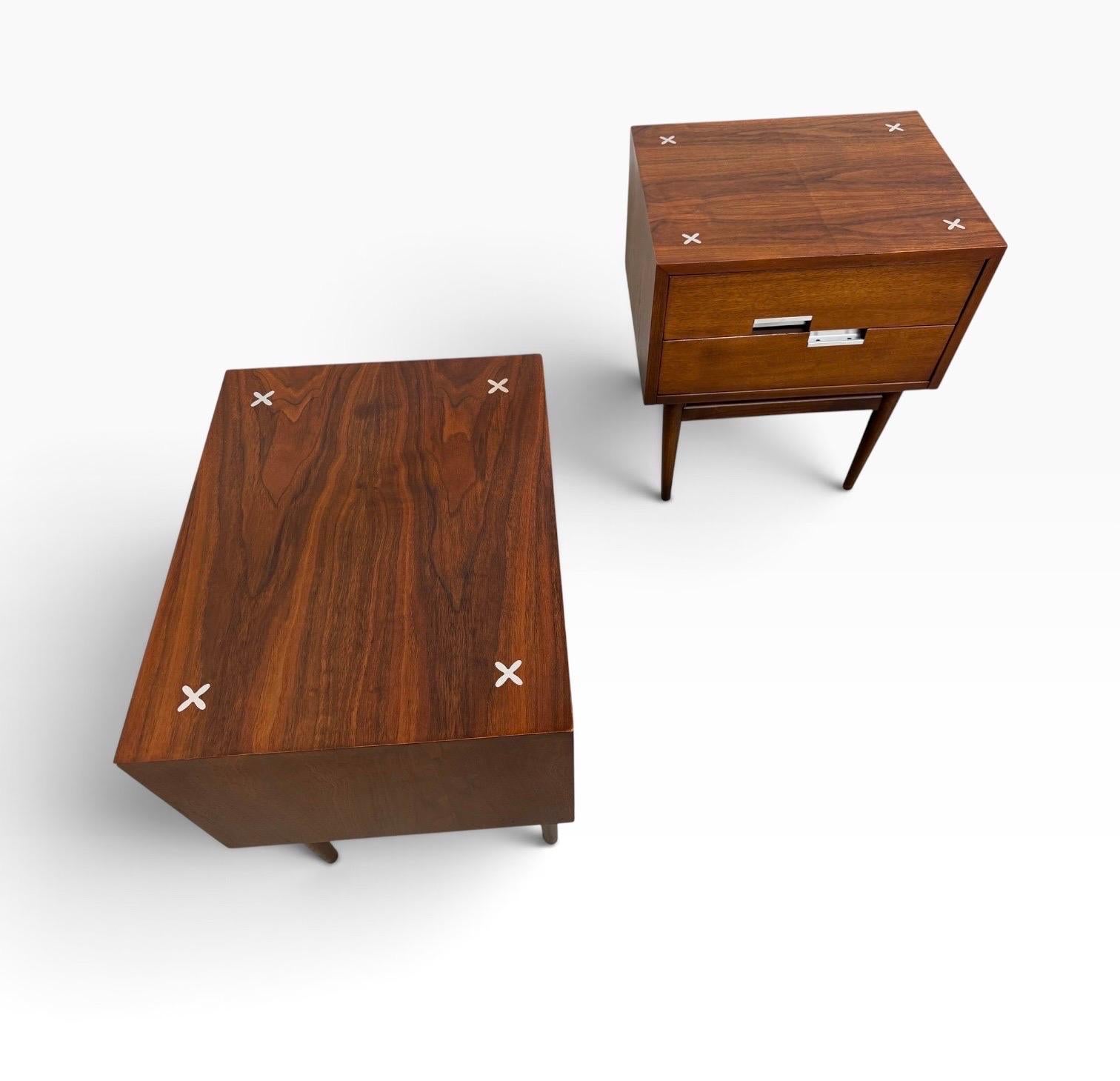
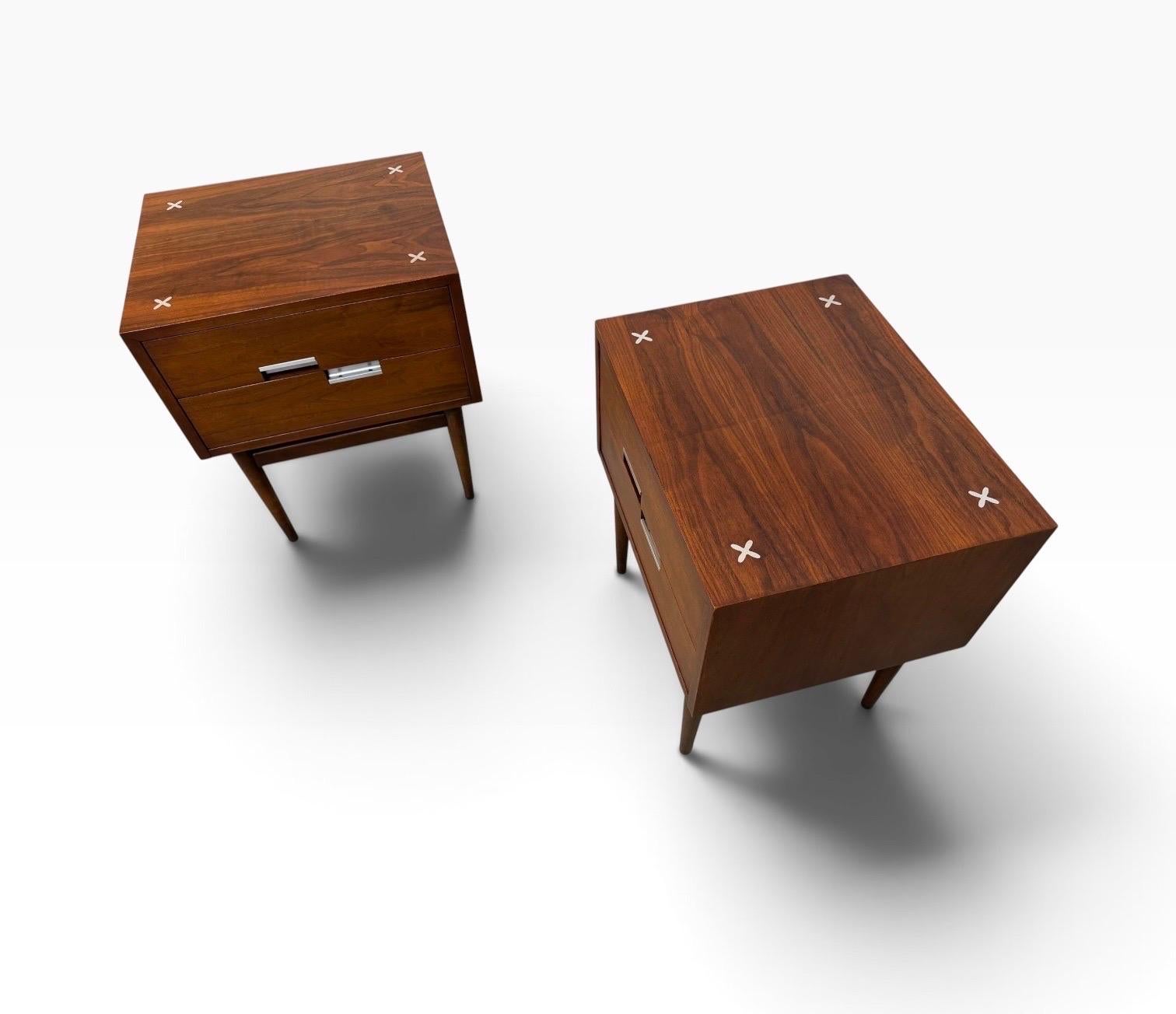
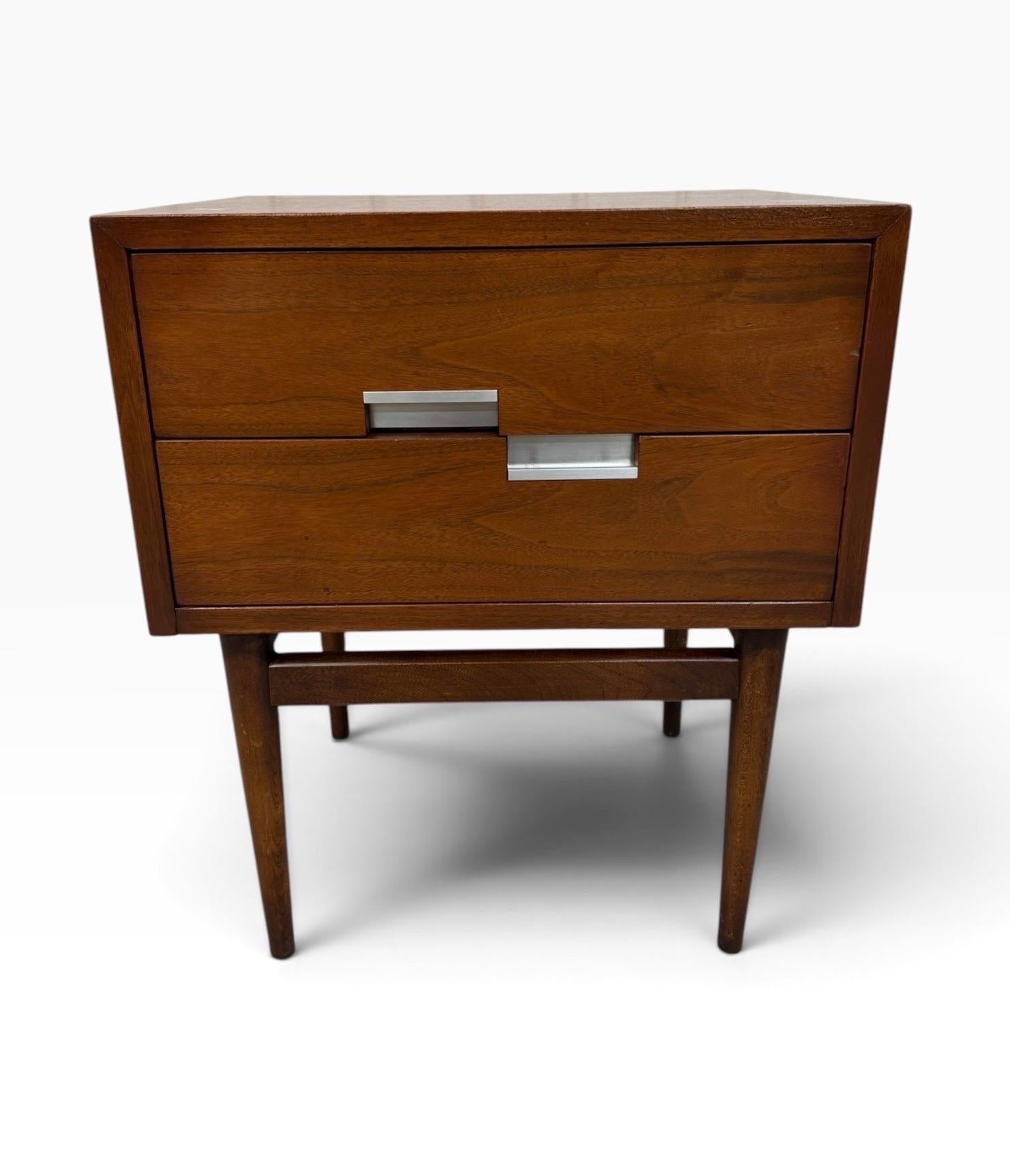
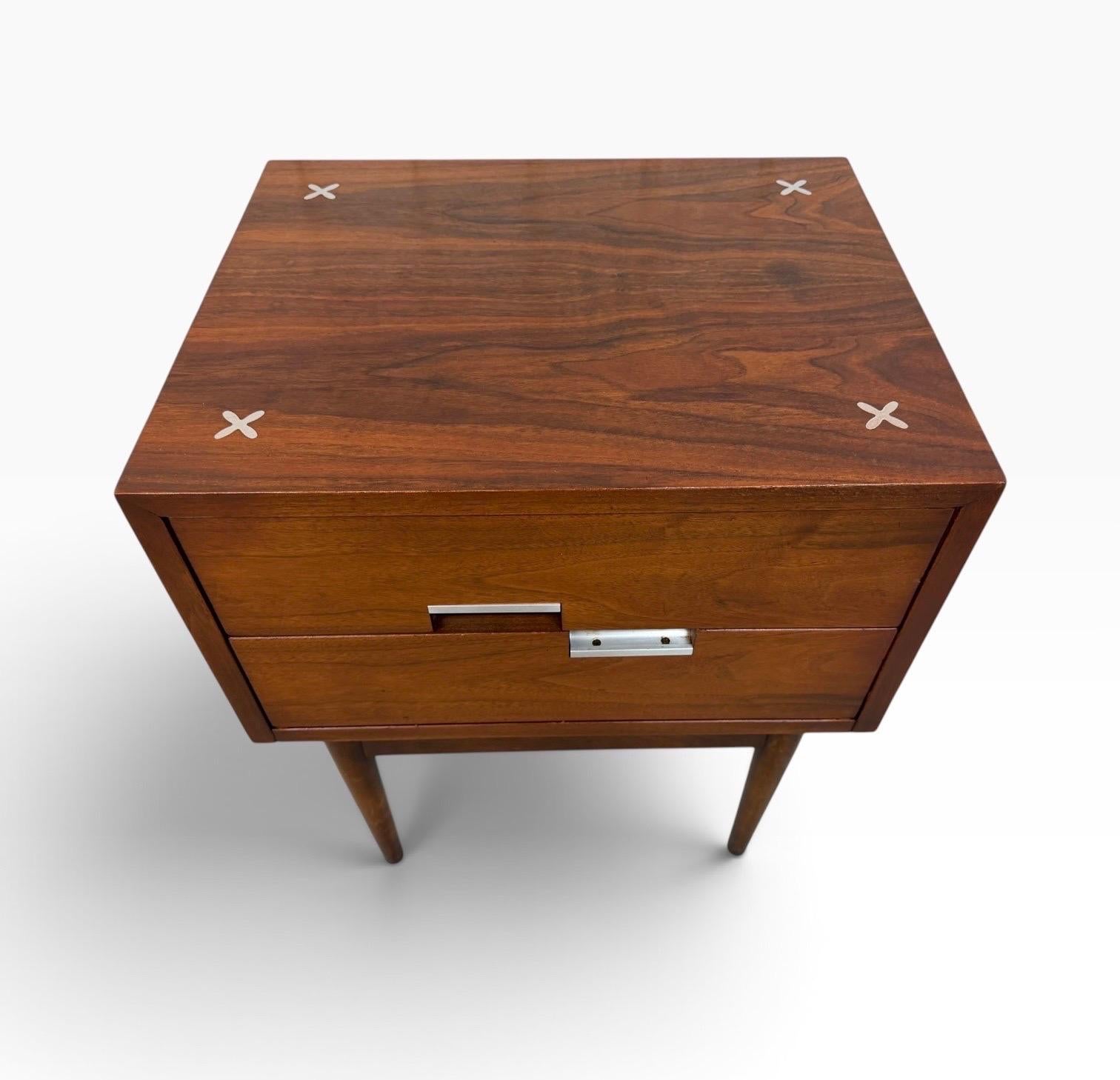
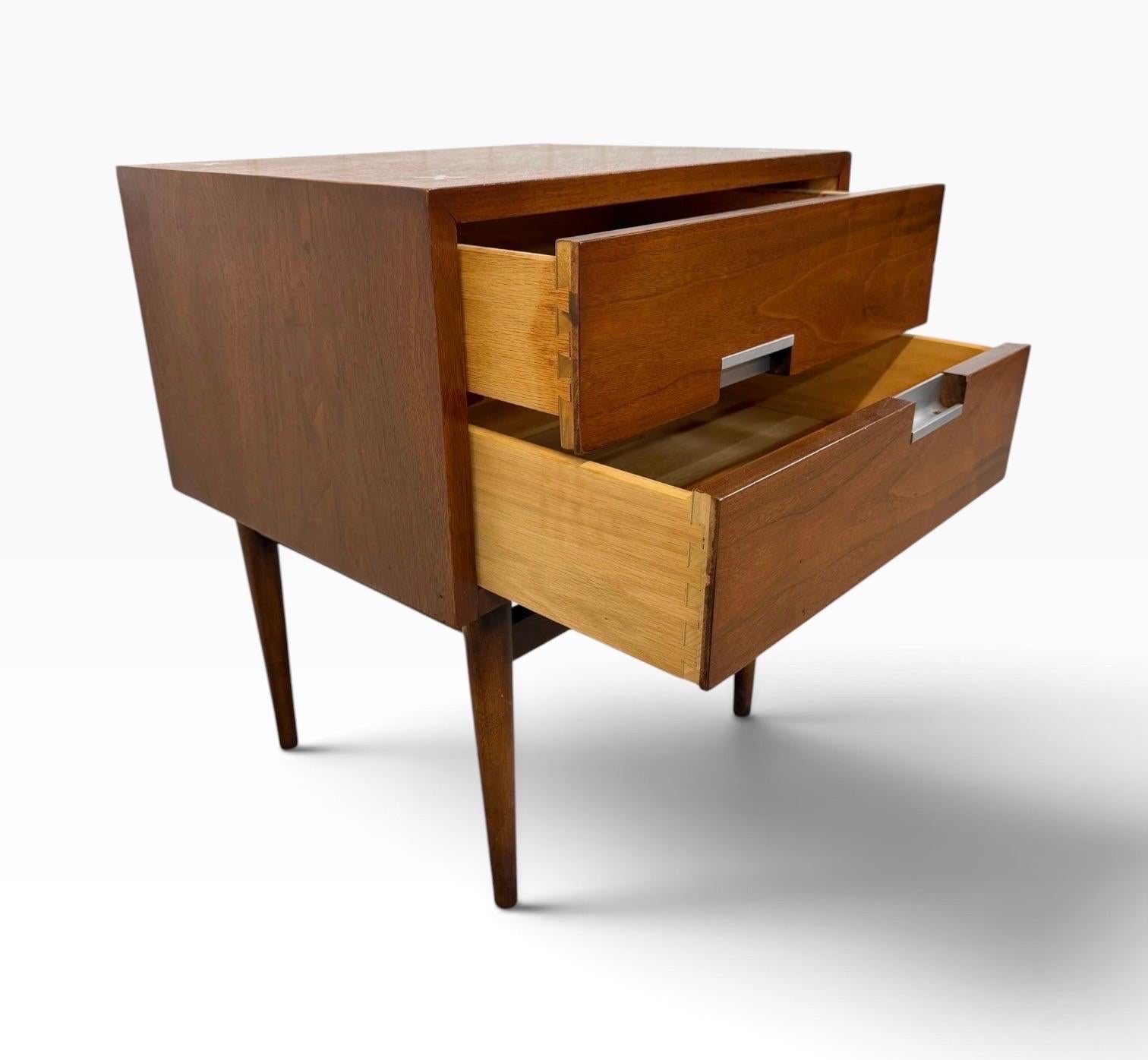
This striking pair of Mid-Century Modern American of Martinsville “Accord” walnut nightstands dates to the 1960s and showcases the collection’s distinctive architectural style. Each nightstand features a beautifully grained walnut case, sleek tapered legs, and eye-catching metal hardware that gives the fronts a clean, modern look.Read moreRead less
This striking pair of Mid-Century Modern American of Martinsville “Accord” walnut nightstands dates to the 1960s and showcases the collection’s distinctive architectural style. Each nightstand features a beautifully grained walnut case, sleek tapered legs, and eye-catching metal hardware that gives the fronts a clean, modern look. Decorative inlaid accents on the tops add an extra layer of character and make these pieces instantly recognizable. Both nightstands have been professionally refinished, bringing out the rich walnut tones while preserving their authentic vintage appeal. Their compact proportions offer practical bedside storage without overwhelming a room. Perfect for a mid-century bedroom, guest room, or even as stylish end tables, this matching pair combines quality American craftsmanship, function, and timeless 1960s design.
Specifications
Condition Notes:
Refinished.
How we attribute makers and designers
We research and identify designers and makers whenever surviving labels, construction details, or reliable documentation allow. On older furniture, labels and stamps may be missing, faded, or removed, and many manufacturers produced closely related designs; some pieces may be later reproductions. When the evidence is not strong enough for a confident attribution, we list the maker as unknown rather than speculate.